Radon in Chicago,
IL
Illinois is an EPA Zone 1 state in its northern two-thirds, including the entire Chicago metro. Illinois Emergency Management Agency radon program data shows approximately 30% of tested homes exceed the action level in the Chicago area.
Risk Level
High Risk2–6 pCi/L
Typical range (area avg.)
EPA action level: 4 pCi/L
Why Chicago Has High Risk Radon
The Chicago metropolitan area sits on flat glacial lake-bed deposits over dolomitic limestone. Northern Illinois counties show higher radon than counties near Chicago's southern suburbs, but all six collar counties are considered elevated risk.
Local Housing and Radon Risk
Chicago's two-flat and three-flat buildings, common in neighborhoods like Logan Square and Wicker Park, typically have full basements. While upper-floor units may have lower radon than basements, ground-floor and basement units require testing.
Testing Advice for Chicago Residents
Illinois EPA provides certified contractor lists and radon testing information. For Chicago condo buildings, lobby the HOA to test common basement areas and parking structures. Illinois law requires radon disclosure in real estate transactions.
How to Test Your Chicago Home
Step 1: Choose Your Test Type
For initial screening, a charcoal short-term test kit ($12–$25) placed for 48–96 hours provides a quick result. For the most accurate reading, a long-term alpha-track test ($20–$35) left in place for 90+ days accounts for seasonal variation — especially important in Chicago's climate.
Step 2: Place the Test Correctly
Test in your lowest livable level — basement if you have one, otherwise the first floor. Keep the test 20 inches from the floor, away from windows and exterior walls. Close windows and doors 12 hours before and during the test for accurate results.
Step 3: Interpret Your Results
Below 2 pCi/L: low concern, retest every 2 years. 2–4 pCi/L: consider mitigation, retest in 2 years. 4 pCi/L or higher: the EPA recommends mitigation. Above 8 pCi/L: prioritize mitigation promptly.
Step 4: Hire a Certified Mitigator if Needed
If your test result is at or above 4 pCi/L, hire a certified radon mitigator. In Illinois, always verify your contractor's state certification. Sub-slab depressurization — the most effective mitigation method — typically costs $850–$1,600 installed in the Chicago area.
Frequently Asked Questions — Radon in Chicago
Is radon a real problem in Chicago?
Yes. Illinois is an EPA Zone 1 state in its northern two-thirds, including the entire Chicago metro. Illinois Emergency Management Agency radon program data shows approximately 30% of tested homes exceed the action level in the Chicago area. The EPA recommends all homes be tested regardless of location — radon levels can vary significantly even between neighboring properties.
How much does radon mitigation cost in this area?
In the Chicago area, professional radon mitigation (sub-slab depressurization) typically costs $850–$1,600 installed. This is a one-time cost that reduces radon by 50–99%. The system requires minimal maintenance and a mitigator can typically complete the work in 3–5 hours.
Should I test if I have a new home?
Absolutely. New homes built with radon-resistant features still show elevated levels in testing — construction conditions and local geology vary too much to assume any home is safe. Test within the first year of occupancy, especially if your home has a basement.
Can I test radon myself, or do I need a professional?
DIY testing is reliable and recommended as a first step. Short-term kits ($12–$25) and long-term kits ($20–$35) are accurate when placed and returned correctly. Professional testing is only required for real estate transactions in some states. If your DIY test shows elevated levels, use a certified professional for both confirmation testing and mitigation.
Nearby Communities & Suburbs
These Chicago-area communities share similar geological and housing characteristics — radon risk patterns are consistent throughout the region.
Test Your Home Now
A $15 test kit is the only way to know your home's actual radon level. Don't guess — test.
See Test Kits →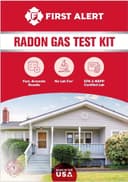

Continuous Monitors
See all radon detectors →