Do Houseplants Actually Clean Your Indoor Air? What the Research Really Shows
A 1989 NASA study launched a thousand "clean air plant" listicles. Here's what that study actually tested, why it doesn't hold up in a real house, and what actually moves the needle on indoor air quality.

Affiliate Disclosure
HomeAirWise participates in the Amazon Associates program and other affiliate partnerships. When you click a product link and make a purchase, we may earn a small commission at no additional cost to you. This helps us maintain the site and continue providing independent research and recommendations. Read our full disclosure.
Snake plants, pothos, and peace lilies show up on nearly every "best air-purifying plants" list on the internet, usually with a citation to NASA. The claim is appealing: a $15 plant from the hardware store, no filters to replace, no electricity bill, and cleaner air as a side effect of decorating your shelf. It would be a genuinely great deal if it were true at the scale a real bedroom or living room requires.
It isn't. The research behind the claim is real, but it was never designed to answer the question "will a plant on my desk measurably clean the air in my house" — and when scientists went back and actually asked that question directly, the answer came back clearly no. Here's where the myth came from, what the follow-up research found, and what's actually worth doing if you want cleaner indoor air.
Where the Myth Started: The 1989 NASA Clean Air Study
The origin point is a real, peer-reviewed study: the NASA Clean Air Study, led by researcher B.C. Wolverton and published in 1989. NASA was interested in how to scrub trace contaminants from the sealed, recirculated air of space station modules, and houseplants were one of several technologies under evaluation.
In the experiment, individual plants were placed inside small, sealed plexiglass chambers — roughly the size of a large cooler, not a room — that were injected with a single volatile organic compound (VOC) at a time, typically benzene, formaldehyde, or trichloroethylene. Over a 24-hour period, researchers measured how much of that VOC disappeared from the sealed chamber's air. Several species, including the peace lily, snake plant, and Boston fern, showed substantial VOC reduction under these tightly controlled conditions.
That result is legitimate. The problem is everything that happened to it afterward: it got lifted out of a sealed one-cubic-meter chamber with a single pollutant and no air exchange, and mapped directly onto marketing claims about a plant sitting in an open, ventilated, several-hundred-square-foot room. Those are not the same physical situation, and the difference turns out to matter enormously.
The Follow-Up Research: What Happens in an Actual Room
In 2019, researchers Bryan Cummings and Michael Waring at Drexel University published a meta-analysis in the Journal of Exposure Science & Environmental Epidemiology that did what the original NASA study never attempted: it pooled the results of a dozen real-world, room-scale studies of houseplants and VOC removal and calculated an actual clean air delivery rate (CADR) per plant — the same metric used to rate air purifiers.
The finding: a single houseplant's realistic CADR for VOCs is roughly 0.023 cubic meters per hour — a number so small it barely registers next to the natural air exchange rate of an ordinary house. Cummings and Waring calculated that to match the VOC-clearing effect of a building's normal background ventilation, you would need somewhere between 10 and 1,000 houseplants per square meter of floor space, depending on the building's air exchange rate. For a 150-square-foot bedroom, the low end of that range alone works out to well over a hundred plants — packed shoulder to shoulder, not arranged decoratively on a windowsill.
The gap between the chamber studies and the room-scale studies comes down to one variable NASA's setup didn't have to contend with: air exchange. A sealed chamber has no incoming air to dilute the plant's slow VOC uptake, so even a small effect looks dramatic over 24 hours. A real room is constantly exchanging air with the outdoors and the rest of the house — through door gaps, window seals, and your HVAC system — at a rate that swamps whatever a houseplant's leaves and soil microbes can remove.
The Numbers Side by Side
Putting the plant CADR next to what a typical room actually needs — and what a dedicated air purifier delivers — makes the mismatch concrete:
| Source | Effective CADR | Plants/units needed for a 150 sq ft bedroom |
|---|---|---|
| Single houseplant (Cummings & Waring, room-scale) | ~0.023 m³/hr | 100–1,000+ to match background ventilation |
| Typical home's natural air exchange | Varies by home, but far exceeds plant CADR | N/A (already occurring) |
| Compact HEPA purifier (e.g. Levoit Core 300S) | 141–149 CFM (~240–250 m³/hr) | 1 unit |
| Mid-size HEPA purifier (e.g. Coway AP-1512HH) | 232–246 CFM (~395–420 m³/hr) | 1 unit |
This isn't a knock on the original NASA researchers — their study answered the question they were actually asking, about a sealed spacecraft module with no ventilation. It's a caution against the decades of marketing that quietly swapped "sealed one-cubic-meter chamber" for "your living room" without mentioning that the two environments behave nothing alike.
So Do Houseplants Do Nothing at All?
Not nothing — just not what the listicles claim. A few effects are real and worth knowing about:
- Humidity. Plants release water vapor through transpiration, which can measurably raise humidity in a small, poorly ventilated room with many plants. This is a genuine effect, though in a home that already struggles with excess moisture or borderline-high humidity, it can push conditions toward the range where mold becomes more likely rather than helping.
- Psychological benefits. Multiple studies on biophilic design have found that having visible greenery indoors is associated with lower reported stress and improved mood and focus. That's a real quality-of-life benefit — it's just not an air quality mechanism, and it doesn't show up on a particle counter or VOC sensor.
- A trivial amount of CO2 uptake. Plants do consume CO2 during photosynthesis, but at typical indoor light levels and plant densities, the effect on a room's CO2 concentration is negligible compared to the CO2 your own breathing adds to the same space.
None of these add up to "cleans the air" in the sense the marketing implies — removing meaningful amounts of particulates, VOCs, or allergens from a normal-sized room.
What Actually Removes VOCs and Particles From Indoor Air
If the goal is a measurable reduction in airborne particles, allergens, or VOCs, three interventions have the research and the physics behind them:
Source control
The single most effective step is reducing what's off-gassing or shedding particles in the first place — see our full guide to VOC sources in the home for specifics on paints, flooring, and furniture. No amount of downstream filtration outperforms simply not introducing the pollutant.
Ventilation
Bringing in outdoor air — via exhaust fans, HVAC fresh-air intake, or simply opening windows when outdoor air quality is good — dilutes indoor VOC and CO2 concentrations far more effectively than any houseplant, which is exactly the mechanism the Drexel researchers were measuring plants against.
Mechanical filtration
A True HEPA air purifier with an activated carbon stage removes particles and adsorbs VOC molecules at a rate that's orders of magnitude beyond what a plant's leaf surface and soil microbiome can manage. If you're unclear on what separates a real HEPA filter from marketing language like "HEPA-type," our HEPA filtration explainer breaks down the actual standard.
Here's how that plays out with real hardware — these are the same models we recommend across our air purifier buying guides for their combination of measured CADR, True HEPA certification, and activated carbon filtration:
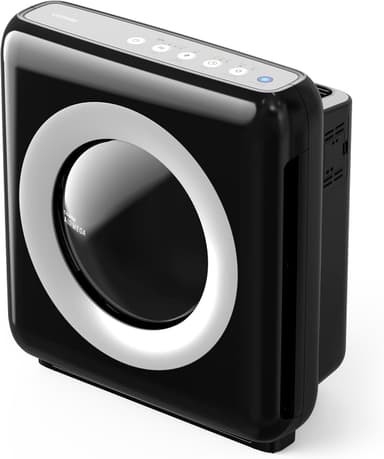
Coway
Coway AP-1512HH Mighty Air Purifier
$89.99
Best-selling 4-stage filtration air purifier for rooms up to 360 sq ft. True HEPA + activated carbon + ionizer.
- Exceptional value for HEPA filtration
- Auto mode with real air quality sensing
- Quiet operation (sleep mode)
As an Amazon Associate we earn from qualifying purchases. Prices updated regularly.
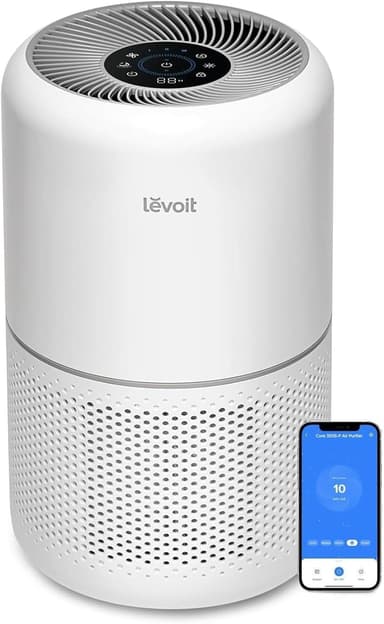
Levoit
Levoit Core 300S Smart Air Purifier
$99.99
Amazon's #1 bestselling air purifier with over 100,000 five-star reviews. True H13 HEPA filters 99.97% of 0.3-micron particles for rooms up to 219 sq ft, with whisper-quiet sleep mode and VeSync app control.
- Amazon's #1 bestselling air purifier with 100K+ reviews
- True H13 HEPA removes 99.97% of 0.3-micron particles
- Whisper-quiet at 24 dB in sleep mode
As an Amazon Associate we earn from qualifying purchases. Prices updated regularly.
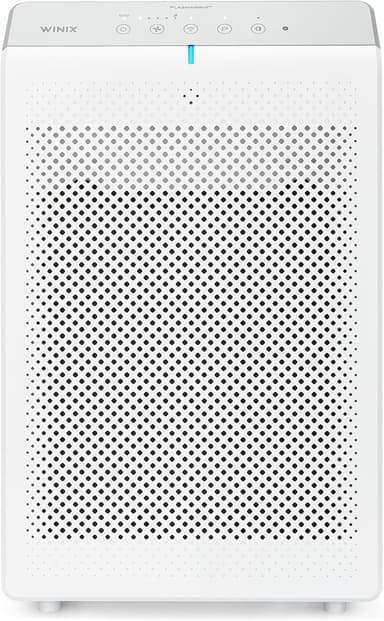
Winix
Winix 5500-2 Air Purifier
$179.99
True HEPA + washable pre-filter + activated carbon for rooms up to 360 sq ft. Includes PlasmaWave technology.
- Washable pre-filter (lower maintenance cost)
- Strong HEPA + carbon combo
- Auto mode with smart air quality sensor
As an Amazon Associate we earn from qualifying purchases. Prices updated regularly.
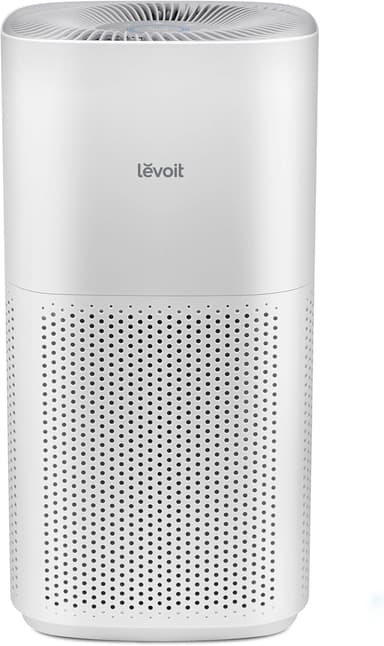
Levoit
Levoit Core 600S Smart Air Purifier
$279.99
Levoit's most powerful home air purifier for large spaces up to 635 sq ft. With a CADR of 410 CFM, built-in laser PM2.5 sensor, and auto-mode intelligence, the Core 600S is the go-to for open-plan living rooms and large bedrooms.
- 410 CFM CADR — covers up to 635 sq ft per cycle
- Built-in laser PM2.5 sensor for auto-mode intelligence
- True H13 HEPA with pet-allergen pre-filter
As an Amazon Associate we earn from qualifying purchases. Prices updated regularly.
Notice that all four list a measured CADR — a number independently tested by AHAM, the same organization that would need to certify a houseplant's clean air delivery rate before "airs-purifying plant" could mean anything more than marketing copy. No plant has ever published one, for the simple reason that it would be too small to be worth stating on a label.
If You Want Plants Anyway — How to Have Both
None of this means you should get rid of your plants. It means you should stop expecting them to do a filter's job. A sensible approach:
- Keep plants for the reasons that are actually real — aesthetics, biophilic wellbeing benefits, and the enjoyment of caring for them.
- Don't overwater in the name of "cleaner air." Soggy potting soil is a mold and mold-spore source, not a mitigator — the opposite of what plant-air-purifier marketing implies.
- Let an actual purifier handle particles and VOCs, sized correctly for the room using the CADR-to-square-footage approach in our HEPA purifier buying guide.
- Verify with data, not vibes. A plug-in air quality monitor will tell you in real time whether your VOC and PM2.5 levels are actually dropping — plants included or not.
If you're building out a broader testing routine for your home, our complete guide to home air quality testing walks through which pollutants are worth measuring and in what order.
Frequently Asked Questions
Which plant is the "best" air purifier if I want to try anyway?
Among the species NASA's chamber study tested, snake plants (Sansevieria) and pothos are commonly cited as relatively high performers and are also easy to keep alive, which matters more in practice than the marginal difference in VOC uptake between species. Just don't expect a measurable change in a room-level VOC or particle reading from a few pots of either.
Did NASA actually recommend houseplants for home air purification?
No. The 1989 study was funded to explore air-scrubbing options for sealed spacecraft environments, not to make a consumer recommendation about home air quality. The leap to "buy these plants to purify your house" happened in later marketing and media coverage, not in NASA's own conclusions.
Can a huge number of plants actually work, if I have the space?
In theory, yes — the Cummings and Waring estimate of 10 to 1,000 plants per square meter is a real calculated threshold, not a rhetorical exaggeration. In practice, packing a room with that plant density is neither affordable nor livable for almost anyone, which is exactly why the researchers framed it as a way of illustrating how small the per-plant effect really is.
Do plants help with allergies or mold spores?
Not in a way that outperforms a purifier, and overwatered potting soil can itself become a minor mold source. If allergies or mold spores are your concern, a True HEPA purifier sized to your room — covered in our allergy air purifier guide — is the intervention with actual measured performance data behind it.
Is there any harm in believing plants clean the air, if I also have a purifier running?
Not much, as long as it doesn't lead you to skip source control, ventilation, or filtration because you think the plants already have it covered. The real risk of the myth is complacency — treating a decorative pothos as a substitute for the interventions that actually move a VOC or PM2.5 reading.
The Bottom Line
The NASA Clean Air Study is real science, honestly conducted, and thoroughly overextended by three decades of marketing that never mentions the word "chamber." When researchers finally tested the claim at room scale, the numbers came back unambiguous: you'd need dozens to hundreds of plants per square meter to rival what your house's normal ventilation is already doing passively, let alone what a purifier like the Coway AP-1512HH or Levoit Core 300S accomplishes with a certified, measured CADR.
Keep the plants if you like them — the wellbeing and humidity effects are genuine. Just don't let a windowsill snake plant stand in for the filtration, ventilation, and source control that actually change what you're breathing.