Selling Your Home? How Indoor Air Quality Problems Can Tank Your Sale — And How to Fix Them First
Radon and mold are two of the most common reasons a home sale gets renegotiated or falls through after inspection. Here's how to test, disclose, and address air quality issues before a buyer's inspector finds them for you.

Affiliate Disclosure
HomeAirWise participates in the Amazon Associates program and other affiliate partnerships. When you click a product link and make a purchase, we may earn a small commission at no additional cost to you. This helps us maintain the site and continue providing independent research and recommendations. Read our full disclosure.
Most sellers spend their pre-listing energy on paint, staging, and curb appeal — and then get blindsided three weeks into escrow by a radon reading of 6.8 pCi/L or a mold flag buried in the inspection report. Both are common enough that real estate agents have a name for the resulting scramble: a "post-inspection renegotiation," and it almost always costs the seller more, in money and in time, than dealing with the issue before the home ever hit the market.
Unlike a cracked driveway or an outdated kitchen, air quality issues are largely invisible until someone tests for them — which means they surface at the worst possible moment: after a buyer is already emotionally invested and a contract is already signed. This guide walks through what typically gets flagged, what you're legally required to disclose, and how a modest amount of pre-listing testing can keep a radon or mold finding from turning into a five-figure renegotiation.
Why Air Quality Findings Derail More Sales Than Sellers Expect
Radon testing has become a near-standard part of the home inspection process in much of the country, not because every buyer specifically requests it, but because many general home inspectors now offer it as an add-on, and many buyer's agents recommend it as a matter of course — particularly for homes with basements or slab foundations. The EPA estimates that 1 in 15 U.S. homes has radon levels at or above the agency's action level of 4 picocuries per liter (pCi/L), the threshold at which the EPA recommends mitigation. In parts of the Midwest, Northeast, and Mountain West, the local rate is considerably higher, which means the odds of a radon flag at inspection are not remote for a large share of sellers.
Mold works differently: it doesn't have a federal numeric threshold the way radon does (there is no EPA or OSHA exposure limit for mold spores), but it doesn't need one to derail a deal. Visible mold, a musty odor noted in the inspector's walkthrough, or moisture staining that suggests a chronic leak are all things a general inspector will flag as "further evaluation recommended" — and that phrase alone is often enough for a cautious buyer to ask for a specialist assessment, a price reduction, or an exit from the contract entirely if they're still within an inspection contingency period.
Both issues share a structural problem for sellers: they're discovered by the buyer's inspector, on the buyer's timeline, which means the seller has no control over the narrative and very little time to respond before the contingency deadline forces a decision.
What You're Actually Required to Disclose
Disclosure requirements vary meaningfully by state, and this guide isn't a substitute for advice from a real estate attorney or your listing agent — but the general shape is consistent across most of the country: if you have actual knowledge of a material defect, including a radon test result above the action level or a known mold problem, most states require you to disclose it on the seller's property disclosure statement, regardless of whether the buyer's inspection would have found it anyway. Concealing a known issue and hoping the buyer's inspector misses it is not a viable strategy — it can expose you to a lawsuit well after closing, sometimes years later, if the issue resurfaces.
Several states go further and require a specific radon disclosure as part of the standard transfer form. Illinois, for example, requires sellers to complete a specific Radon Disclosure under its Radon Awareness Act, and Minnesota has a similar statutory radon disclosure requirement that took effect in 2014. Other states fold radon into the general "known defects" section of a broader disclosure form. Mold-specific statutes are less common, but a documented mold problem almost always falls under the general material-defect disclosure duty that exists in nearly every state.
| Situation | Do you have to disclose it? | What it usually means for the sale |
|---|---|---|
| You've never tested for radon | No specific test result to disclose in most states, but some state forms still require you to answer a radon question ("unknown" is typically an acceptable answer) | Buyer will likely test during their own inspection; you lose control of timing |
| You tested and radon was below 4 pCi/L | Generally not a required disclosure, though some sellers choose to share it as a selling point | Can be used to reassure buyers and speed up the transaction |
| You tested and radon was at or above 4 pCi/L | Yes, in most states, if you have actual knowledge — required on the disclosure form | Buyers will typically expect either a price adjustment or a completed mitigation system before closing |
| You had a mold remediation done in the past | Generally yes — most states require disclosure of past material defects even after repair | Buyers often request documentation of the remediation and warranty, if any |
| You suspect mold but haven't tested | Disclosure duties generally hinge on actual knowledge, not suspicion — but concealment after discovery is legally risky | Testing before listing lets you resolve or address it on your own terms |
For a deeper look at radon basics and why the EPA recommends testing every home, see our guide on what radon gas is and why the EPA says every home should be tested.
Radon: The Single Most Common Deal Complication
Radon is a colorless, odorless radioactive gas that seeps up from soil and rock through foundation cracks, sump pits, and gaps around pipes. It's the second-leading cause of lung cancer in the United States after smoking, according to the EPA and the Surgeon General, which is precisely why it draws so much attention during a real estate transaction — buyers (and their agents) increasingly know to ask about it.
If you already know your home has never been tested, or it's been several years since the last test, testing before you list gives you three real advantages: you control the timeline, you have time to shop for a qualified mitigation contractor rather than accepting whatever's available on a tight contingency deadline, and you can price the home accordingly from the start instead of negotiating a credit after the fact — which buyers' agents often push higher than the actual mitigation cost.
How to test before listing
A short-term charcoal or alpha-track test kit, placed in the lowest lived-in level of the home for 2–7 days, gives you a reliable baseline reading in about two weeks including lab turnaround. Test during closed-house conditions (windows shut, normal HVAC operation) for an accurate result, since radon levels fluctuate with ventilation. Our guide on where and how to test for accurate radon results covers exact placement.
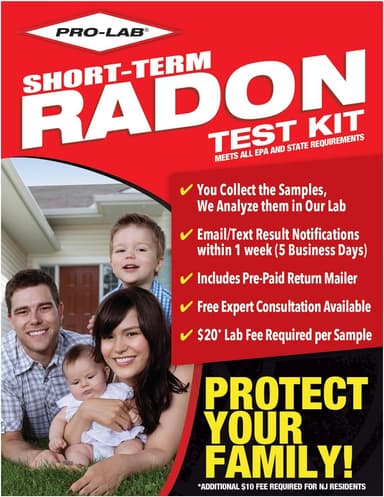
Pro Lab
Pro Lab Radon Test Kit (2-Pack)
$22.99
Two short-term radon test kits in one pack. Ideal for testing two floors or doing a duplicate test for EPA-recommended confirmation.
- 2 kits for price of ~1.5 single kits
- Pro Lab is NRPP-accredited with decades of experience
- Good for EPA-recommended confirmation testing
As an Amazon Associate we earn from qualifying purchases. Prices updated regularly.
The Pro Lab Radon Test Kit (2-Pack) is a smart choice for sellers specifically because it includes two independent tests — one to establish your baseline reading months before listing, and a second to confirm results closer to your listing date or after any mitigation work, without having to order a separate kit. Both are short-term charcoal tests processed by an accredited lab, with results typically available within a few business days of the lab receiving your sample.
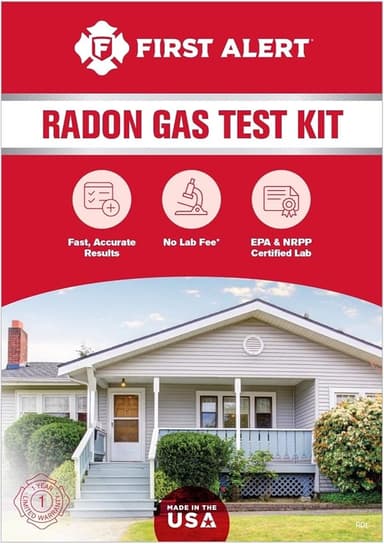
First Alert
First Alert Radon Gas Test Kit, RD1
$18.98
EPA-listed short-term charcoal radon test. Place for 48–96 hours, mail to lab, get email results in 72 hours. Amazon's Choice with 10K+ reviews.
- Most affordable EPA-listed home radon test
- Lab fees included (except NJ); results emailed within 72 hours
- Amazon's Choice with 10,000+ verified reviews
As an Amazon Associate we earn from qualifying purchases. Prices updated regularly.
If you only need one reading and want to keep costs minimal, the First Alert Radon Gas Test Kit is a reliable, widely available charcoal-based option. It's a good fit for sellers doing a quick pre-listing check who plan to rely on the buyer's inspection for any confirmatory testing later.
If your result comes back at or above 4 pCi/L, a licensed radon mitigation contractor can typically install a sub-slab depressurization system in a single day for most homes, bringing levels down by 80–99%. Our explainer on how sub-slab depressurization actually works covers what the process involves and what it costs. Getting this done before you list — rather than under contract-deadline pressure — usually means better contractor availability and a cleaner negotiating position, since you can advertise the home as already mitigated instead of negotiating a credit for work that hasn't happened yet.
Mold: What Inspectors Are Actually Looking For
General home inspectors are not mold specialists, and most inspection contracts explicitly exclude mold testing from the standard scope. But inspectors are trained to spot the visual and olfactory cues that suggest a moisture problem: staining on drywall or subfloor, a musty smell in a basement or crawl space, peeling paint near plumbing fixtures, or visible discoloration in bathrooms and around window frames. Any one of these typically triggers a note recommending "further evaluation by a qualified professional" — language that reads as a red flag to a buyer regardless of how minor the underlying issue turns out to be.
That gap between "inspector's visual flag" and "confirmed mold problem" is exactly where pre-listing testing earns its cost. A cleared test result you can hand to a buyer's agent is far more persuasive than a seller's verbal assurance, and it can prevent a routine visual note from snowballing into a full contingency renegotiation.
Common spots inspectors and buyers scrutinize
- Basements and crawl spaces — the most humidity-prone areas of the home and the most common source of a musty-odor flag.
- Under kitchen and bathroom sinks — slow leaks here often go unnoticed by sellers who don't regularly check, but they're one of the first places an inspector looks.
- Around window frames and exterior walls — condensation and past roof or flashing leaks show up as staining or soft drywall.
- HVAC systems and ductwork — condensation on AC coils or ducts running through unconditioned spaces can support mold growth that's invisible until the system is opened up.
- Attics — poor ventilation combined with roof leaks or ice-dam damage is a common, easily missed source.
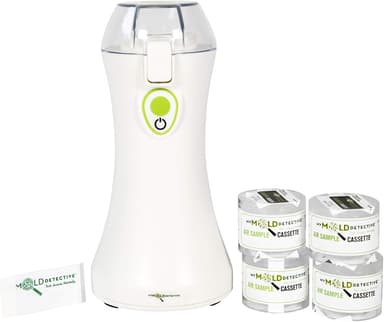
My Mold Detective
My Mold Detective MMD103
$39.99
5-test mold detection kit with air and surface sampling. AIHA-accredited lab analysis included.
- Includes both air and surface sampling
- AIHA-accredited lab analysis
- 5 tests in one kit
As an Amazon Associate we earn from qualifying purchases. Prices updated regularly.
For a targeted pre-listing check of a specific area — a basement corner with a past leak, or a bathroom that's always felt a little damp — the My Mold Detective MMD103 is a fast, DIY-friendly option that gives you a same-day visual culture result without waiting on lab turnaround. It won't identify the specific mold species, but it will tell you quickly whether elevated mold activity is present so you know whether professional remediation is warranted before you list.
If your home has a documented history of water intrusion, or you want a more rigorous whole-home baseline, our ranked guide to mold test kits covers lab-analyzed options that identify specific mold genera, which matters if a buyer's agent asks for species-level documentation later. And if you find elevated humidity but no visible growth yet, our homeowner's guide to mold prevention covers the ventilation and moisture-control steps that stop a problem before it starts.
Humidity: The Root Cause That Keeps Resurfacing
A large share of both mold flags and buyer complaints trace back to a single underlying issue: chronically elevated indoor humidity, particularly in basements. The EPA recommends keeping indoor relative humidity between 30% and 50%; sustained readings above 60% are enough to support active mold growth given the right surface and enough time. If your basement or crawl space has ever felt damp, smelled musty, or shown condensation on pipes, addressing the humidity — not just cleaning up any visible mold — is what actually prevents the problem from reappearing after a buyer moves in and asks for their money back under a post-closing dispute.
A properly sized dehumidifier running for several weeks before your pre-listing inspection can meaningfully reduce or eliminate a musty odor and stop active growth, which matters because "actively growing" versus "old, dried, inactive" is often the difference between a costly remediation recommendation and a simple clean-and-monitor note. Our ranked guide to basement dehumidifiers covers sizing for spaces from a single room up to a full basement.
Should You Test Before Listing, or Just Wait for the Buyer's Inspection?
Waiting costs sellers more often than it saves them. Here's the practical comparison:
| Testing before you list | Waiting for the buyer's inspection | |
|---|---|---|
| Who controls the timeline | You do — test and fix on your schedule | The buyer's contingency deadline, often just 7–10 days |
| Contractor selection | Time to compare mitigation or remediation quotes | Rushed decisions, often accepting the first available contractor |
| Negotiating position | List with a clean result, or a documented, completed fix | Buyers often push for credits well above actual repair cost |
| Deal risk | Low — issue is resolved before buyers ever see the home | Higher — some buyers walk rather than renegotiate |
| Upfront cost to you | $15–$150 for testing, plus repair costs if needed | Same repair costs, often at rush pricing, plus possible deal loss |
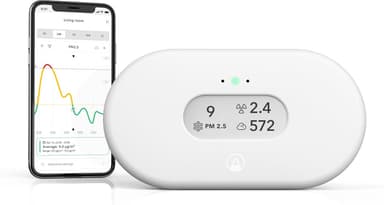
Airthings
Airthings View Plus
$299.99
The most comprehensive home air quality monitor available. Tracks radon, PM2.5, CO2, VOCs, humidity, temperature, pressure, and more.
- 7 sensors including radon AND PM2.5 (rare combination)
- Built-in e-ink color display
- Wi-Fi with real-time app access
As an Amazon Associate we earn from qualifying purchases. Prices updated regularly.
For sellers who want visibility during the entire listing period — not just a single point-in-time test — a continuous air quality monitor like the Airthings View Plus tracks radon, humidity, VOCs, and CO2 in real time via a smartphone app. It's a useful option if your home will be on the market for weeks or months, since it lets you catch a humidity spike or radon fluctuation early rather than discovering it only when the buyer's inspector shows up. It's also a credible piece of documentation to share with a buyer's agent who wants more than a single lab result.
What Happens If the Buyer's Inspection Finds a Problem Anyway
Even with pre-listing testing, a buyer's inspector may flag something new — conditions change, and a different inspector may test a different part of the home. If that happens, you generally have a few paths forward within a standard inspection contingency: complete the repair or mitigation yourself before closing, offer a closing cost credit equal to a reasonable, documented repair estimate, or negotiate a price reduction. Sellers who've already done their own pre-listing testing are in a much stronger position here — you can push back on inflated repair estimates with your own documented baseline, and you're not starting the research process from zero under deadline pressure.
For a broader walkthrough of how to approach testing methodically — what to test first, what results mean, and what actions they trigger — our complete beginner's guide to testing your home's air quality is a useful companion to this one.
A Pre-Listing Air Quality Checklist
- Order a radon test 2–3 months before your target listing date, so you have time to mitigate if needed without delaying your timeline.
- Walk basements, crawl spaces, attics, and under-sink areas for musty odors, staining, or visible mold.
- Test any area of concern with a DIY mold kit, or hire an inspector for a whole-home assessment if you have a documented history of water intrusion.
- Run a dehumidifier in damp areas for several weeks before your pre-listing check to reduce active mold growth and odor.
- Keep all test results, remediation invoices, and mitigation system documentation — buyers and their agents will ask for paperwork, not just your word.
- Check your state's specific disclosure form for a radon or mold question, and answer truthfully based on what you actually know.
- If levels come back elevated, get quotes from at least two licensed contractors before your listing goes live.
Frequently Asked Questions
Do I legally have to test my home for radon before selling?
No — testing itself is not typically required by law in most states, only disclosure of results you already have. But many buyers will test as part of their own inspection regardless of what you do, so a pre-listing test simply lets you control that process instead of reacting to it.
If I mitigate radon before listing, does that add value?
It doesn't usually increase your sale price directly, but it removes a common negotiation point and can speed up the transaction, since buyers and their agents no longer need to factor mitigation cost or timeline into their offer.
Can a buyer back out of a contract because of a radon or mold finding?
Generally yes, if the sale is still within an active inspection contingency period, which is standard in most residential purchase contracts. That's exactly why resolving these issues before the home is even shown removes the leverage point entirely.
What if I already know about a mold problem but haven't fixed it — do I have to tell buyers?
In nearly every state, yes. Actual knowledge of a material defect generally triggers a disclosure duty regardless of whether you've addressed it, and failing to disclose can expose you to legal liability after closing, sometimes well after the sale is final.
Does homeowners insurance cover mold remediation before a sale?
Usually only if the mold resulted from a sudden, covered event like a burst pipe — most policies exclude mold caused by long-term humidity, condensation, or gradual leaks, which is the more common scenario. Check your specific policy before assuming coverage.
Will a home inspector automatically test for radon and mold?
Not automatically in most cases. Radon testing is usually an add-on service the buyer requests and pays for separately, and mold testing is typically excluded from a standard inspection scope entirely, triggered only if the inspector visually flags a concern. Don't assume either will happen unless the buyer specifically arranges it.
The Bottom Line
Air quality problems are unusual among home-sale complications because they're almost entirely preventable from a timing standpoint — the gas and the spores don't care when they're discovered, but you have real control over whether that discovery happens on your terms, months before listing, or on the buyer's terms, with a contingency clock running. A Pro Lab Radon Test Kit (2-Pack) or First Alert Radon Gas Test Kit costs less than a single afternoon of staging work and gives you months of runway to mitigate calmly if needed. A quick check with the My Mold Detective MMD103 in any room with a history of dampness closes off the single most common source of a "further evaluation recommended" note on an inspection report. And an Airthings View Plus running throughout your listing period means you'll never be surprised by a reading a buyer's inspector finds first.
None of this guarantees a smooth sale — plenty of other things can complicate a real estate transaction. But indoor air quality is one of the few categories where a modest amount of pre-listing homework reliably prevents a specific, well-documented, and entirely common source of renegotiation. Test early, document everything, and you'll walk into your listing period with one less variable to worry about.